The short-term rental market is experiencing a significant evolution in the United Kingdom, where Airbnb has established itself as an essential platform for individuals wishing to monetize their properties. This context encourages a thorough understanding of the tax implications related to income generated by this activity. Many people assume that declaring their Airbnb earnings is a straightforward formality, but the British tax system, managed by HM Revenue and Customs, enforces specific rules to follow. For 2025, these standards continue to evolve, with increased attention from authorities on transparency and tax compliance by hosts.
There are a few things you need to know: the conditions for benefiting from special tax reliefs, the thresholds for taxation, and the distinction between residential leasing and property investment. For example, the Furnished Holiday Let (FHL) status grants certain advantages, but obtaining it is linked to specific criteria, including the number of days the property is rented out. These nuances directly influence the calculation and payment of your taxes.
Attention to digital accounting and tax management tools, such as software like FreeAgent, Xero, or the support provided by firms like KPMG or TaxAssist Accountants, helps facilitate declaration and tax optimization for individuals. This comprehensive guide aims to decode these essential tax mechanisms for all those operating a property on Airbnb in the UK.
1. Understanding the tax status of Airbnb income in the UK
In the UK, income derived from renting via Airbnb is generally considered taxable income and must be reported to the tax authorities, namely HM Revenue and Customs (HMRC). Understanding the tax framework is crucial to avoid penalties and optimize your declarations. There are mainly two configurations: renting out a room in your primary residence and leasing out a dedicated property.
The nature of this activity influences the applicable taxation type. For example, renting out a room in your main home allows you to benefit from the Rent a Room Relief scheme, which exempts up to £7,500 of rental income per year from tax. This scheme is advantageous for those engaging in occasional rental activities without heavy tax burdens.
Conversely, if Airbnb is operated as a more substantial revenue source, especially through secondary homes or real estate investments, the tax regime differs. You are then subject to more traditional tax rules but with specificities related to Furnished Holiday Lettings. This status applies to furnished properties meeting certain criteria and offers significant tax benefits, particularly in terms of deducting expenses and partial exemptions from taxes like the capital gains tax.
This fiscal framework relies on financial thresholds and specific requirements:
- Availability of the property for rent at least 210 days per year 🏡
- Effective rental to third parties for a minimum of 105 days per year 📅
- Furnishings and equipment suitable for short-term rentals 🛋️
- Location within the UK or the European Economic Area (EEA) 🇬🇧
Meeting these criteria is essential to ensure your income qualifies under this advantageous regime. Otherwise, your income will be taxed under standard rental income rules.
| Type of rental 🏠 | Thresholds & Conditions 📊 | Tax advantages 💰 |
|---|---|---|
| Rental of a room in primary residence | Up to £7,500 annual income | Partial exemption via Rent a Room Relief |
| Furnished Holiday Let (FHL) | 210 days available and 105 days rented | Capital allowances deductions, Capital Gains Tax reduction |
| Standard rental (other property) | Normal income declaration | No specific benefits |
Do your research and stay informed, especially through platforms like UK Landlord Tax, to avoid misinterpretations and remain compliant with current legislation.

2. The rules for declaring Airbnb income: what you need to know
For each Airbnb host, the question of declaring income to HMRC arises quickly. Generally, once your annual total income exceeds the personal allowance threshold, which is £11,850 in 2025, reporting becomes mandatory. This limit applies to all income, including earnings from professional activities.
It is important to note that even if your income stays below this threshold, declaring your Airbnb earnings remains useful to avoid future tax inspections. Platforms like Airbnb routinely provide the UK tax authorities with reports of earnings received, increasing oversight.
Reported income can then fall into the category of standard rental income or be handled under the micro-entrepreneur regime, depending on the nature of your activity. The micro-business regime offers a flat £1,000 deduction on rental income, which is practical for those seeking to reduce accounting complexity.
In cases of significant income from multiple properties, maintaining meticulous accounting is essential. Management software like FreeAgent, TurboTax, or Xero assist in preparing your declaration correctly and automating tax calculations.
- Obligation to declare rental income once the personal threshold is exceeded 📈
- Consider platforms reporting to HMRC to anticipate audits 👁️
- Use available tax reliefs to reduce the taxable base 📉
- Sort expenses: cleaning fees, furniture, maintenance, etc. 🧹
- Prepare appropriate accounting in case of high activity 💻
| Annual income threshold (£) 💷 | Declaration obligation | Possible tax deduction |
|---|---|---|
| £0 – £11,850 | Not mandatory if only Airbnb income | No tax if below threshold |
| £11,851 – £50,270 | Mandatory | Micro-entrepreneur allowance: £1,000 |
| Over £50,270 | Mandatory with full declaration | Option for detailed deductions on actual expenses |
For a more detailed overview of the system, refer to this comprehensive guide. It’s an essential tool for mastering the nuances of the British tax system.
3. The implications of business rates for UK Airbnb hosts
The business rates scheme concerns a significant portion of Airbnb hosts. This type of tax targets properties considered commercial, including furnished rentals available for more than 140 days per year, which are not treated as primary residences.
This local tax can be seen as a substantial additional burden for professional or semi-professional hosts. In England, the rule is clear: if your property is rented out for at least 140 days per year, you are potentially liable for business rates. This also applies in Scotland and Wales but with variations in the criteria based on rental or available days.
For most hosts, the key distinction is between paying council tax (housing tax) or business rates:
- Less than 140 days rented: pay council tax 🏠
- More than 140 days available and at least 70 days rented: liable for business rates 💼
A proper understanding of this rule will help you avoid unwanted surprises. Contact your local assessor to determine your situation precisely, especially if the property is located in Scotland.
| Rental days 📆 | Applicable tax type | Geographic zone ⚖️ |
|---|---|---|
| Less than 140 days | Council Tax | UK |
| More than 140 days available / More than 70 rented | Business Rates | Wales, England |
| More than 140 days available | Business Rates (based on local assessment) | Scotland |
To explore further, the article on the Airbnb housing tax offers a comprehensive analysis of these specific taxes.
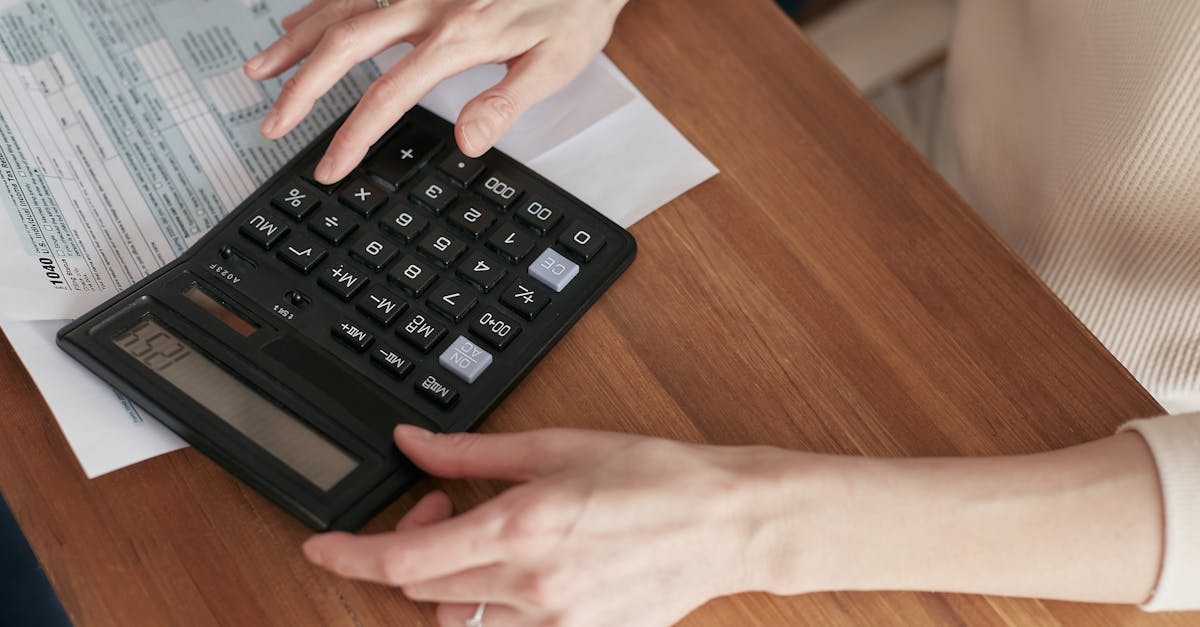
4. How to properly account for expenses and optimize your Airbnb declarations
Managing and declaring Airbnb income tax does not just involve reporting a number on your tax return. Optimization necessarily includes considering business expenses to reduce the taxable base. Proper documentation of all expenses can lead to lower tax bills.
Here are some expense categories you can typically deduct:
- 🏠 Cleaning and regular maintenance costs
- 🛋️ Purchase and replacement of furniture and equipment
- 🔧 Repairs and small improvements
- 📶 Advertising costs and Airbnb commissions
- 💡 Utilities related to services (electricity, water, heating) proportionate to rental use
It’s essential to use appropriate tools to track these expenses and avoid confusion. Tax experts like Deloitte or PwC strongly recommend software such as FreeAgent, Xero, or integrating modern financial services like GoCardless to automate payments and record keeping.
Case studies show that proper accounting not only ensures compliance but also optimizes tax payments: calculating the taxable base can be significantly reduced by including all allowable charges.
| Type of expense 🛒 | Tax eligibility ✅ | Impact on taxation 💸 |
|---|---|---|
| Cleaning and maintenance fees | Yes | Full deduction |
| Furniture and equipment purchases | Yes, under capital allowances | Amortization reductions |
| Airbnb commissions and advertising | Yes | Full deduction |
| Electricity and water costs | Yes, proportionally to usage | Proportional deduction |
| Major improvements | Sometimes, based on individual assessment | Variable |
5. The advantages of the Furnished Holiday Let regime: a tax opportunity not to be overlooked
The Furnished Holiday Let (FHL) status is a specific classification that allows Airbnb hosts in the UK to access advantageous tax reliefs. Little known to the general public, this status deeply modifies how income and capital gains are treated on tax declarations.
This scheme targets furnished holiday rentals for commercial purposes, subject to meeting certain criteria as previously mentioned. Its benefits include:
- 💼 Consideration of profits as earned income, useful for pension rights calculation
- 📊 Access to capital allowances deductions on furniture and equipment
- 🏠 Potential to optimize capital gains taxation using specific regimes like Entrepreneurs’ Relief
- ⏳ Rollover Relief allowing deferred taxation when selling one FHL property to acquire another similar one
The fiscal interest of this regime makes it a valuable opportunity for real estate investors seeking to optimize the profitability of their holiday rentals.
| Tax advantage 🌟 | Description | Potential impact 💸 |
|---|---|---|
| Reduced Capital Gains Tax | Preferential rate of 10% instead of 28% | Significant savings upon sale |
| Cap allowances eligible | Deductions on furniture and equipment | Lower profit taxes |
| Rollover Relief | Deferral of taxation when buying new property | Postponement of taxes |
| Entrepreneurs’ Relief | Partial exemption on certain gains | Tax relief |
It’s worth verifying whether your rental qualifies for these conditions and consulting specialists like TaxAssist Accountants to ensure proper application of these provisions.

6. VAT and thresholds: what Airbnb hosts need to monitor
Beyond income tax, the issue of VAT can sometimes be confusing for Airbnb hosts in the UK. When your rental revenues exceed the £85,000 threshold, registration for VAT becomes mandatory.
VAT then applies at 20% on rents, which can represent a significant additional cost. Several options are available:
- 🧾 Invoicing VAT directly to your clients by increasing your rental price
- 🏷️ Absorbing VAT costs without passing them on to clients
- ⚖️ Combining these approaches by slightly adjusting your tariffs
While the registration and declaration process may seem complex, solutions such as TurboTax or online specialist platforms exist to manage VAT efficiently and avoid penalties.
| Annual rental income (£) 💷 | VAT obligation | Main consequences |
|---|---|---|
| 0 – 84,999 | No registration needed | No VAT to charge |
| 85,000 and above | Mandatory registration | 20% VAT to charge or absorb |
Be sure to anticipate these thresholds to plan your activity smoothly. More information on this topic can be found on the official Airbnb page about UK taxation.
7. Practical tips to simplify your Airbnb tax management
Tax management for an Airbnb can quickly become complex. Here are some tips to make your life easier:
- 🗂️ Use specialized accounting software, like FreeAgent or Xero, to automate your declarations
- 📊 Consult experts such as KPMG or TaxAssist Accountants for personalized support
- ⏰ Meet declaration deadlines rigorously to avoid penalties
- 💼 Keep personal and professional finances separate for clearer accounting
- 📚 Maintain a rigorous filing system for invoices and receipts
Many tools and services facilitate hosts’ lives, such as the GoCardless platform, which manages direct bank debits easily. Likewise, consulting firms like Deloitte or PwC can be invaluable for hosts with significant activity or multiple properties.
| Tool / Service 🛠️ | Main feature | Key advantage 🎯 |
|---|---|---|
| FreeAgent | Automated accounting management | User-friendly for sole traders |
| Xero | Online bookkeeping and tax declarations | Full banking integration |
| TurboTax | Simplified tax declarations | Step-by-step guidance for beginners |
| KPMG | Professional tax consulting | Advanced expertise in Airbnb taxation |
| GoCardless | Bank payment management | Secure and automated |
8. Tax penalties for non-declaration or errors on your Airbnb income
Failure to comply with tax obligations related to your Airbnb income can have serious consequences. HM Revenue and Customs has strict means to identify lapses, including automatic income reporting through platforms like Airbnb.
The risks include:
- ⚠️ Significant fines, potentially amounting to thousands of pounds
- ⌛ Penalties and interest on unpaid taxes
- 📋 In-depth tax audits and ongoing surveillance over multiple years
- 🚫 Risk of criminal proceedings in case of proven fraud
Therefore, it is crucial to be proactive and meticulous in declaring your Airbnb income to avoid these issues. Resources like DéclaLoc Airbnb offer advice and tools for optimal declaration, helping to avoid common mistakes.
| Sanction type 🚨 | Consequence | Potential amount 💸 |
|---|---|---|
| Fine | Immediate financial penalty | From hundreds to several thousand pounds |
| Interest on late payment | Additional charge on unpaid taxes | Variable depending on delay duration |
| Tax audit | Thorough examination of accounts | High indirect costs |
| Criminal prosecution | In extreme cases, fraud | Punishment of up to imprisonment |
To protect your interests, a wise approach is to seek assistance from specialists to guide you and avoid any legal issues.
FAQ – Frequently asked questions about Airbnb income taxation in the UK
- Should I declare my Airbnb income even if I rent out only one room?
Yes, but if your annual income is less than £7,500 and you rent a room in your primary residence, you can benefit from Rent a Room Relief which exempts this income from tax. - What is a Furnished Holiday Let and what are its advantages?
It is a furnished rental available for at least 210 days per year and rented for a minimum of 105 days. This status offers tax benefits such as reduced capital gains tax and expense deductions. - Do I have to pay VAT on my Airbnb income?
VAT applies if your rental income exceeds £85,000 annually. You will then need to register and charge VAT at 20% to clients or absorb this cost. - Can I deduct my Airbnb expenses from my taxable income?
Yes, under certain conditions, expenses related to the rental (cleaning, furniture, charges) are deductible and can reduce your taxable base. - What are the risks in case of non-declaration?
Penalties range from fines and late interest to extensive tax audits and criminal proceedings. It is strongly advised to comply strictly with declaration obligations.
